TRANSMUCOSAL MANAGEMENT IN FULL-ARCH REHABILITATION
Dr. Barbara Sabiu
Studio Sabiu
Via Don Minzoni 20San Giovanni Suergiu (SU),Italy
Specialist in surgeryand implantology,prosthodonticsand orthodontics
Abstract
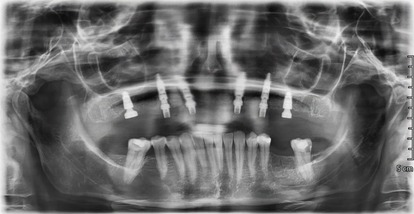
The patient presented with a severely compromised maxillary dentition, characterised by extensive carious lesions, root fractures, non-restorable teeth and a functional condition that was no longer adequate from both a masticatory and aesthetic standpoint (Fig. 1). Treatment alternatives were discussed with the patient, with an analysis ofthe proposed therapeutic options based on the patient’s level of cooperation andeconomic considerations.
Following a thorough clinical, photographic and radiographic assessment, a full-archimplant-supported rehabilitation was agreed upon, based on digital planning in order to ensure maximum precision, safety and predictability. The treatment involved the placement of Advan GTB TZERO implants according to the ATiM protocol, selected for their reliability in anatomically complex situations, combined with the use of the GFA prosthetic component, which is ideal for achieving correct prosthetic emergence and optimal prosthetic passivation. The fully digital workflow allowed accurate matching between CBCT data and intraoral scans, surgical guide design and management of the immediate prosthetic phase, reducing treatment time and improving patient comfort.
This case report describes in detail all phases of treatment - diagnosis, surgery andprosthetic rehabilitation - -and documents the clinical evolution up to the follow-up phase, highlighting how the integration of the Advan surgical protocol with digital technologies can significantly improve predictability, aesthetics and the patient’s quality of life.